
Choosing Peace: Creating Trauma-Informed Holiday Traditions
Barb Dorrington
12/8/20252 min read
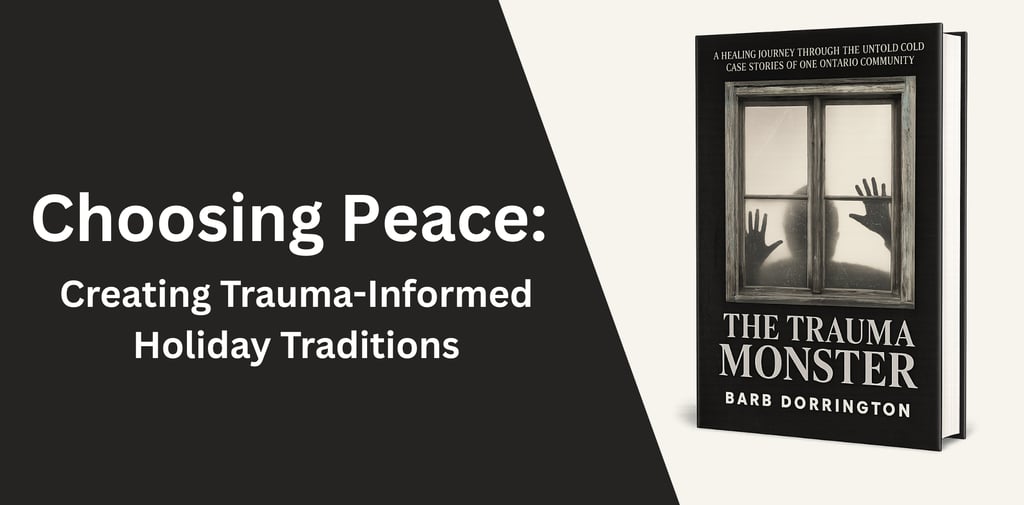
The holidays are often presented as a time filled with joy, celebration, and togetherness. But for trauma survivors, this season can feel overwhelming, intrusive, or emotionally exhausting. The pressure to perform holiday cheer or participate in traditions that don’t feel safe can create anxiety rather than joy.
In The Trauma Monster, Barb Dorrington reminds us that healing means choosing what nourishes your nervous system—not what satisfies expectations. This December, you are allowed to create holiday traditions that feel gentle, grounding, and truly your own.
Why Traditional Holidays Can Feel Hard
Many holiday rituals involve: - Loud gatherings - Complex family dynamics - Disrupted routines - Emotional memories - Expectations to socialize or entertain
These experiences can activate old wounds or overwhelm a sensitive nervous system. If traditional festivities don’t feel supportive, it doesn’t mean you’re “doing the holidays wrong.” It means you’re listening to your needs.
You’re Allowed to Choose Peace Over Pressure
You are allowed to celebrate differently—or not at all. You are allowed to choose quiet over chaos, connection over obligation, intention over tradition.
Here are gentle, trauma-informed holiday ideas that prioritize emotional safety, comfort, and peace.
1. Create Soft, Quiet Rituals
Small rituals can feel grounding and meaningful without overwhelming your senses. Consider: - Lighting a candle in the morning - Taking a slow walk in the cold air - Playing calming music instead of holiday noise - Making a warm drink and savoring it mindfully
These simple moments can bring more peace than any elaborate celebration.
2. Redefine What “Togetherness” Means
Connection doesn’t have to mean crowded gatherings. You might choose: - A cozy evening with one trusted friend - A phone call with someone who feels safe - A shared activity with a partner or child
Small, meaningful connection can be far more healing than forced family time.
3. Build Traditions That Honor Your Healing
Your traditions can reflect who you are today—not who you were when trauma taught you to shrink.
Try traditions like: - Journaling about what you’re proud of this year - Creating an ornament or keepsake that symbolizes growth - Spending part of the day volunteering or doing something kind - Setting intentions for the year ahead
These rituals help reclaim the season as a time of renewal rather than stress.
4. Give Yourself Permission to Opt Out
Skipping certain events or traditions doesn’t make you selfish—it makes you self-aware.
You can say: - “I won’t be attending this year, but thank you.” - “I’m keeping things simple this season.” - “I need a quiet holiday for my well-being.”
You don’t owe anyone an explanation beyond what feels comfortable.
5. Create Sensory-Safe Traditions
If sound, crowds, or chaos are overwhelming, consider sensory-friendly alternatives: - Watching holiday lights from your car - Baking quietly at home - A slow morning with blankets and soft lighting - A movie night with warm socks and silence
Your body deserves calm.
6. Honor Your Grief, Too
For many survivors, holidays stir up grief—whether for lost loved ones, lost childhoods, or lost versions of yourself.
A trauma-informed holiday tradition may include: - Lighting a candle for what you’re grieving - Writing a letter to someone you miss - Holding a moment of silence
Grief deserves space just as much as joy.
You Get to Decide What the Holidays Mean Now
As Barb Dorrington teaches in The Trauma Monster, reclaiming your life often means rewriting old stories—and the holidays are no exception.
You are allowed to: - Celebrate quietly - Say no - Create new rituals - Honor your healing - Choose peace
This season doesn’t have to look like anyone else’s. It only has to feel safe, nourishing, and authentic to you.
For trauma survivors, the greatest tradition you can begin is this: choosing yourself.