
Healing is Nonlinear: Embracing Setbacks as Part of the Journey
Barb Dorrington
10/6/20252 min read
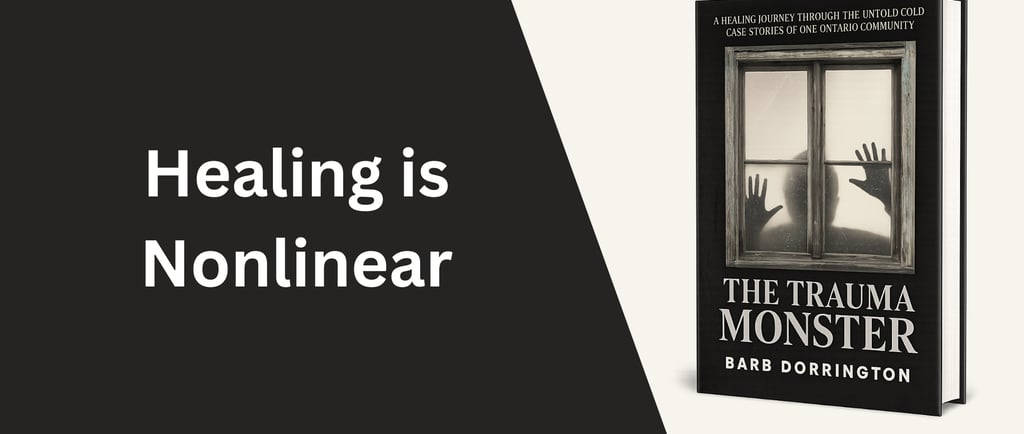
When it comes to healing from trauma, many of us imagine progress as a straight upward line: each day a little better than the last, each milestone bringing us closer to peace. But the truth, as Barb Dorrington reminds us in The Trauma Monster, is that healing doesn’t follow a straight path. It’s messy. It’s cyclical. And setbacks are not signs of failure—they are part of the process.
The Myth of Linear Healing
We live in a culture that loves quick fixes and simple solutions. So when old triggers resurface or painful feelings return, it’s easy to think: I’m back at square one. But you’re not. Healing is not about never being triggered again. It’s about responding to those moments with greater awareness, resilience, and compassion than you could before.
Why Setbacks Happen
Trauma is stored in the nervous system, not just the mind. That means certain sounds, smells, places, or situations can unexpectedly bring the past rushing back. Setbacks happen because healing isn’t about erasing the past—it’s about learning to live with it in new ways.
Stressful seasons, new relationships, or big life changes can also stir up old wounds. This doesn’t mean you’re failing. It means you’re human.
How to Embrace Setbacks as Part of Healing
1. Reframe the Setback
Instead of asking, “Why am I back here again?” try asking, “What is this moment here to teach me now?” Each wave brings new insight.
2. Notice the Progress
Even if the pain feels familiar, you’re not the same person you were the last time. Maybe you recovered quicker. Maybe you used healthier coping strategies. That’s progress.
3. Practice Self-Compassion
Setbacks often trigger shame. Speak to yourself gently: “It’s okay to struggle. This doesn’t erase the healing I’ve done.”
4. Lean on Support
Reach out to safe people, support groups, or therapists. Healing in community reminds you that you’re not alone.
5. Rest, Reset, and Continue
Sometimes what feels like a setback is your body’s way of asking for rest. Honor that need, then keep moving forward at your own pace.
The Spiral of Healing
Think of healing not as a straight line but as a spiral. You may circle back to old pain, but each time you do, you’re approaching it from a higher level of awareness. You’re not starting over—you’re moving deeper into wholeness.
As Barb Dorrington shares in The Trauma Monster, setbacks don’t define your healing. Your courage to keep going does.
Healing is not about perfection. It’s about persistence. And every step, even the ones that feel backward, is still part of the journey forward.