
Holding Space for Grief During the Holidays
Barb Dorrington
12/29/20252 min read
The holiday season is often portrayed as a time of joy, connection, and celebration. But for many trauma survivors, December brings a very different emotional landscape—one filled with grief, longing, and memories that ache instead of sparkle.
Grief doesn’t take a holiday. In fact, it often becomes louder during this time of year. Whether you’re grieving a person, a relationship, a version of yourself, or the childhood you never got to experience, your pain is real. And it deserves space.
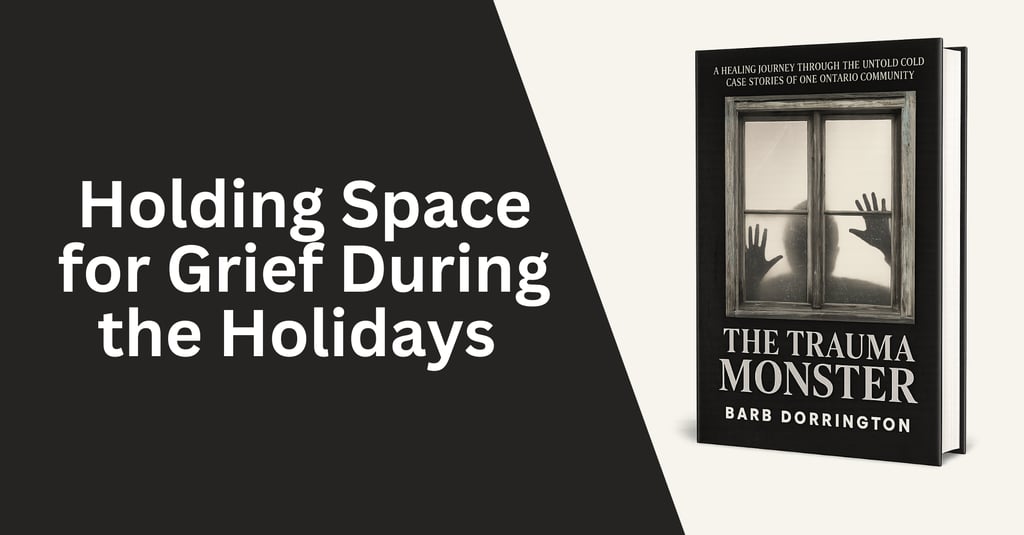
As Barb Dorrington shares in The Trauma Monster, healing doesn’t mean forcing yourself to feel festive. It means honoring what your heart is carrying—without pressure, comparison, or apology.
Why Grief Feels Bigger in December
The holidays amplify emotions. The contrast between cultural expectations and personal realities can be overwhelming. You might be grieving:
· A loved one who is no longer here
· A family that wasn’t safe to return to
· A childhood that lacked joy or stability
· A relationship that ended
· A part of yourself you lost to trauma
Even if your grief is invisible to others, it is valid.
You Don’t Have to “Be Okay” for the Holidays
There is no rule that says you must be cheerful in December. You don’t have to perform happiness or push down your feelings. You can experience grief and still participate in the season in your own way.
Here are gentle ways to hold space for grief while caring for your heart.
1. Allow Your Grief to Exist
You don’t need to hide it or justify it. Sit with your grief when it comes. Acknowledge it with compassion:
“I see you. I know why you’re here.”
Giving grief permission often softens its intensity.
2. Create a Ritual to Honor What You’ve Lost
Rituals offer grounding and validation. Consider:
· Lighting a candle in memory of someone or something
· Writing a letter you never got to send
· Placing a photo or symbol somewhere meaningful
· Playing a song that connects you to your feelings
Rituals give your grief a safe container.
3. Choose Gentle Surroundings
If traditional gatherings are painful or overwhelming, you’re allowed to create your own version of the holidays.
This might look like: - A quiet movie night - A walk outdoors - A simple meal instead of a large gathering - Time alone or with one trusted person
You get to define what feels supportive.
4. Listen to Your Body
Grief doesn’t only live in the heart—it lives in the body. Pay attention to signs of fatigue, tension, or overwhelm. Offer your body what it needs: - More rest - Slower days - Warmth and comfort - Moments of stillness
Your body is processing more than others may realize.
5. Let Go of Holiday Perfection
You don’t need the “perfect” holiday. You don’t need to meet any expectations. You don’t have to decorate, host, cook, or pretend. Let this season be as gentle and simple as you need it to be.
Grief Is Not Something You Must Fix—It’s Something You Carry
As Barb Dorrington reminds us in The Trauma Monster, grief is not a sign of weakness. It is a sign of love, of loss, of humanity. And it deserves tenderness.
You are not behind. You are not failing the season. You are not alone.
This December, give yourself the gift of space—space to feel, to rest, to remember, and to honor your journey.
Grief and healing can coexist. And so can you.