
Rest as Resistance: Why Slowing Down is Essential for Trauma Recovery
Barb Dorrington
10/20/20252 min read
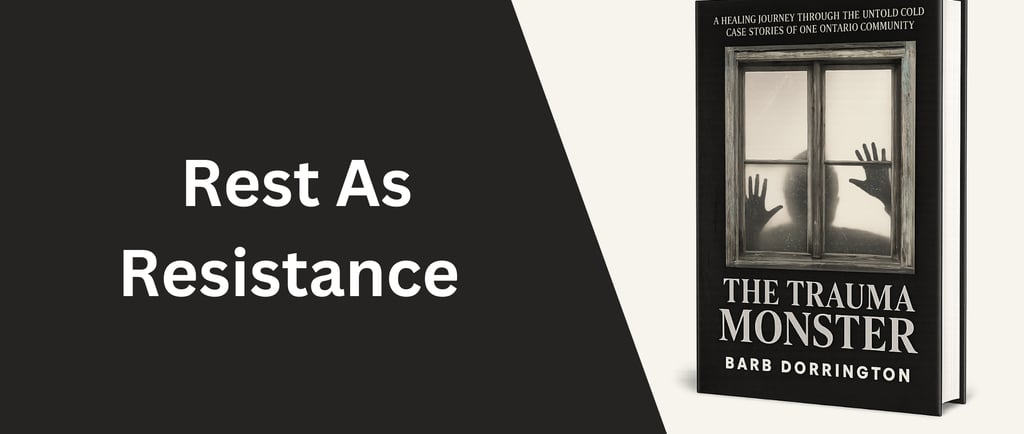
In a world that glorifies hustle and productivity, slowing down can feel uncomfortable—or even unsafe. For trauma survivors, rest is often the hardest thing to allow. After all, when you’ve lived in survival mode, being busy becomes a form of protection. But as Barb Dorrington shares in The Trauma Monster, true healing requires rest. In fact, slowing down is one of the most powerful forms of resistance against the trauma monster.
Why Rest Feels Unsafe After Trauma
Trauma teaches the nervous system to stay on high alert. Hypervigilance—constantly scanning for danger—becomes the default. Stillness can feel threatening, as if letting your guard down will invite harm. So survivors often keep moving, keep working, keep pushing.
This can show up as: - Overworking or staying constantly busy - Struggling to sleep or rest without guilt - Equating worth with productivity - Feeling anxious when doing “nothing”
But healing asks us to relearn what safety feels like—and rest is a key part of that process.
Rest as a Radical Act
Choosing rest is not laziness. It’s an act of reclaiming power. When you allow yourself to pause, you’re telling your nervous system: It’s safe to slow down. I don’t have to be in survival mode anymore.
Rest is resistance against the messages of trauma that say: - “You’re only valuable if you’re doing.” - “You have to stay alert to be safe.” - “You don’t deserve peace.”
Every nap, deep breath, or moment of stillness defies those lies.
Ways to Practice Rest in Trauma Recovery
1. Redefine Rest
Rest doesn’t just mean sleep. It can mean listening to calming music, journaling, daydreaming, or sitting quietly with a cup of tea.
2. Schedule Downtime
If your nervous system resists slowing down, put rest on your calendar the way you would a meeting. Treat it as essential.
3. Start Small
Even five minutes of mindful breathing or lying down without distraction can help train your body to feel safe in stillness.
4. Notice the Guilt—and Let It Pass
You may feel guilty at first. That’s normal. Acknowledge it, then remind yourself: Rest is part of healing, not indulgence.
5. Create Restful Rituals
Signal safety to your body through rituals like dimming the lights, lighting a candle, or using soft blankets. These cues help your nervous system relax.
You Deserve Rest
As Barb Dorrington emphasizes in The Trauma Monster, trauma recovery is not just about confronting pain—it’s about creating safety, softness, and space for renewal. Rest is not the absence of healing work; it is the work.
Slowing down doesn’t mean you’re falling behind. It means you’re choosing to live, not just survive. It’s a declaration that you are worthy of peace.
And sometimes, the bravest thing you can do is simply close your eyes, take a breath, and rest.