
The Courage to Be Seen: Healing the Fear of Visibility After Trauma
Barb Dorrington
11/3/20252 min read
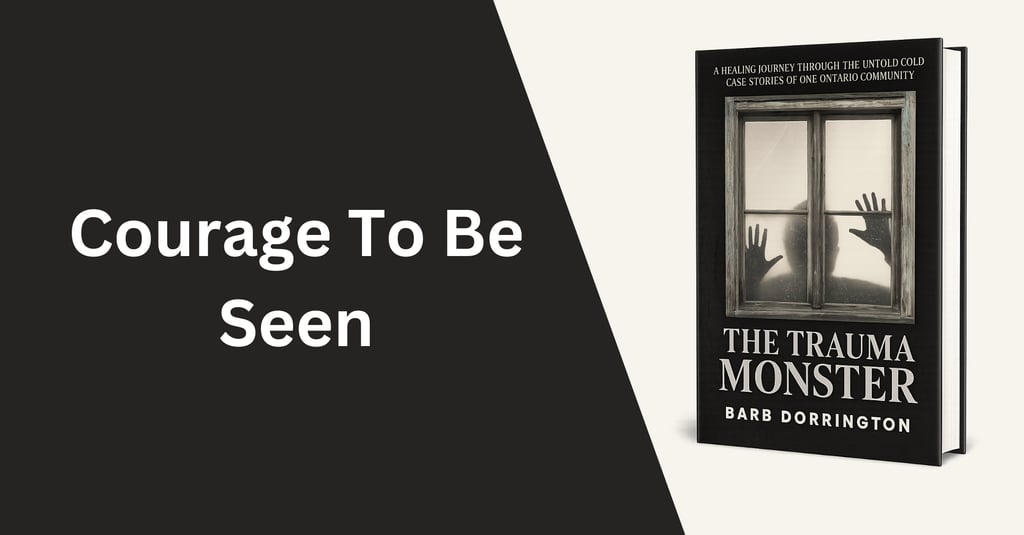
After trauma, being seen can feel dangerous. Many survivors learn to hide—not just physically, but emotionally. You might keep your voice small, your opinions quiet, or your dreams tucked away where no one can judge or hurt them.
As Barb Dorrington reminds us in The Trauma Monster, this fear of visibility isn’t weakness—it’s protection. It’s what your nervous system learned to do to survive. But healing means learning that it’s safe to step into the light again.
Why We Hide After Trauma
When you’ve experienced harm, rejection, or humiliation, your brain associates visibility with vulnerability. The logic becomes simple: If they can’t see me, they can’t hurt me.
This can manifest in subtle ways: - Avoiding attention or praise - Downplaying your accomplishments - Staying quiet in conversations - Struggling to share creative work or personal stories
Hiding can feel safe—but it also keeps you small. It prevents connection, opportunity, and the full expression of who you are.
The Healing Power of Being Seen
Visibility doesn’t mean exposure—it means authenticity. It’s about allowing yourself to exist as you are, without apology.
Here’s how reclaiming your visibility supports healing:
1. It Rebuilds Self-Trust
Every time you show up authentically, you teach your nervous system that it’s safe to be real.
2. It Invites Connection
When you let others see your truth, you create space for genuine relationships based on understanding, not performance.
3. It Breaks Shame’s Grip
Shame thrives in secrecy. Speaking your truth—even to one safe person—loosens its hold.
4. It Honors the Real You
You are not who trauma told you to be. Visibility is how you reclaim the self that’s been hidden beneath the armor.
Steps Toward Being Seen Again
1. Start Small
Share something personal with someone you trust. Let yourself be witnessed in your honesty.
2. Affirm Your Safety
When the fear rises, remind yourself: I’m safe now. I can choose who gets to see me.
3. Use Creative Expression
Art, writing, or storytelling can help you practice visibility in a safe, empowering way.
4. Celebrate Your Courage
Every act of openness—no matter how small—is a victory. Healing visibility is not about spotlight moments; it’s about consistent truth.
You Deserve to Take Up Space
As Barb Dorrington writes in The Trauma Monster, “Trauma taught us to shrink, but healing teaches us to expand.” The world needs your presence, your voice, your light.
You are allowed to be seen. You are allowed to be heard. And you are worthy of being known—not despite your story, but because of the strength it took to survive it.
Stepping into visibility isn’t about becoming fearless—it’s about being brave enough to show up anyway.