
The Gift of Rest: Allowing Yourself to Slow Down During a Busy Season
Barb Dorrington
12/15/20252 min read
The holiday season arrives with a whirlwind of expectations—shopping, planning, hosting, attending, decorating, performing, pleasing. Everywhere you look, there’s a message that you should be doing more. But for trauma survivors, December’s pace can feel unbearable. Your nervous system may already be working overtime, and the added pressure of the season can push you toward exhaustion.
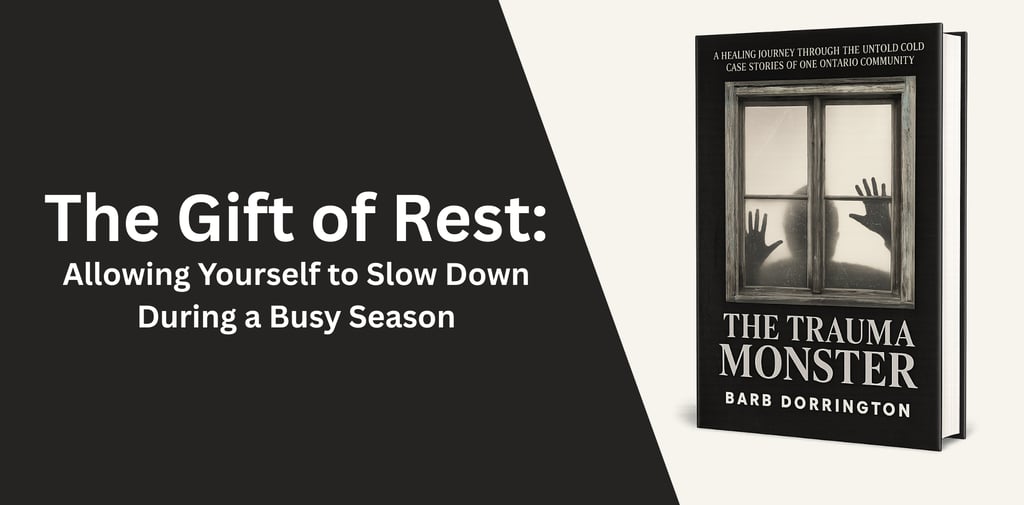
In The Trauma Monster, Barb Dorrington reminds us that rest is not laziness—it’s medicine. It’s how we step out of survival mode and offer our bodies the care they’ve been denied for far too long.
This month, consider giving yourself the gift you truly need: rest.
Why Rest Feels Hard for Trauma Survivors
Trauma often teaches us that safety comes from staying busy, staying useful, staying small, or staying quiet. Rest can feel dangerous because it requires stillness—and stillness leaves room for thoughts, feelings, and memories.
Many survivors struggle with: - Feeling guilty when not being productive - Difficulty relaxing or slowing the mind - A nervous system stuck in fight-or-flight mode - The belief that rest must be earned
But the truth is simple: you deserve rest because you exist, not because you’ve “done enough.”
December Doesn’t Have to Be Busy for You
You get to choose a different pace—one that supports your healing.
Here are gentle ways to incorporate rest into a season that often demands the opposite.
1. Give Yourself Permission to Pause
Before December begins, ask yourself: - What can I let go of? - What is truly necessary? - Where can I choose ease instead of obligation?
Let your answers guide your month.
2. Create Moments of Micro-Rest
Rest doesn’t always mean hours of sleep or long breaks. Sometimes it’s: - Sitting quietly for 5 minutes - Taking slow breaths before entering a busy room - Placing a hand on your heart to calm your body - Turning off your phone for an hour
Small rests add up, especially during stressful seasons.
3. Protect Your Energy With Boundaries
Say no to what drains you. Say yes to what nourishes you.
This might mean: - Skipping events that overwhelm your nervous system - Asking others to share responsibilities - Leaving gatherings early - Choosing rest over tradition
You are not obligated to exhaust yourself for anyone’s expectations.
4. Build Restful Rituals
Support your body with rituals that bring calm: - Warm baths - Reading in bed under soft lighting - Gentle stretching - Listening to peaceful music - Drinking something warm while watching the snow
Rituals anchor your nervous system in safety.
5. Release the Guilt
Resting during a busy season can make you feel like you’re falling behind—but healing asks you to do the opposite.
Tell yourself: - Rest is productive for my healing. - I am allowed to slow down. - My worth is not tied to how much I do.
Your body needs rest more than it needs perfection.
Rest Is a Form of Resistance
In a world obsessed with speed, rest is powerful. It’s how you reclaim your body, your peace, and your autonomy from the trauma that once controlled you.
As Barb Dorrington teaches in The Trauma Monster, slowing down isn’t a setback—it’s a sign of healing. When you choose rest, you tell your nervous system: I am safe now. I don’t have to fight anymore.
This December, give yourself the gift that no one else can give you: a softer, slower season that supports your healing instead of draining it.