
The Masks We Wear: How Trauma Teaches Us to Hide (and How to Take Them Off)
Barb Dorrington
10/13/20252 min read
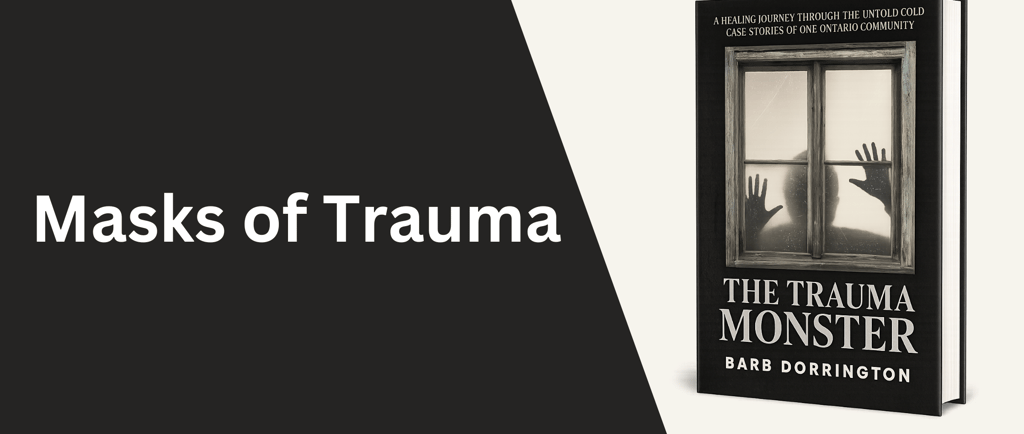
When we experience trauma, one of the first lessons we learn—often unconsciously—is how to hide. Not just physically, but emotionally. We put on masks to protect ourselves, to survive, to make the world think we’re fine even when inside we’re hurting.
In The Trauma Monster, Barb Dorrington explains that these masks are not weaknesses. They are strategies. They once kept us safe. But over time, they can prevent us from living fully and authentically.
Common Masks Survivors Wear
The Perfectionist
“I’ll never be criticized if I do everything flawlessly.”
Perfectionism is a shield against rejection, but it comes at the cost of exhaustion and self-worth.
The People-Pleaser
“If I make everyone happy, no one will leave or hurt me.”
This mask prioritizes others’ needs at the expense of our own, leaving us drained and resentful.
The Achiever
“If I accomplish enough, I’ll finally feel worthy.”
Achievement soothes the fear of inadequacy but rarely fills the inner void.
The Comedian
“If I make people laugh, they’ll never know I’m in pain.”
Humor becomes a mask to deflect vulnerability, hiding grief and loneliness.
The Invisible One
“If no one notices me, I can’t be hurt.”
Silence and invisibility protect against harm but also cut us off from connection and belonging.
Why We Hide
These masks develop because trauma teaches us that being fully seen is unsafe. Maybe your needs were dismissed, your voice silenced, or your emotions punished. So you learned to adapt. And it worked—at least for a while.
But masks are heavy. And carrying them for too long keeps us from healing.
How to Begin Taking the Masks Off
1. Notice the Mask
Ask yourself: “When do I hide who I really am?” Awareness is the first step.
2. Thank It for Protecting You
Your mask served a purpose. Honor it. Say: “You kept me safe when I needed you. But I don’t need you in the same way anymore.”
3. Experiment with Vulnerability
Share a little more of your truth—with a trusted friend, a therapist, or even in your journal. Test the waters of being seen.
4. Reconnect with Your Needs
What do you really want—beyond what pleases others or looks good on the outside? Give yourself permission to honor those needs.
5. Celebrate Authenticity
Each time you show up without a mask, acknowledge the courage it took. These small acts build the foundation for living fully yourself.
Living Without the Mask
As Barb Dorrington reminds us in The Trauma Monster, healing doesn’t mean you were wrong to wear the mask. It means you’re finally safe enough to take it off.
The world doesn’t need your perfection, compliance, or invisibility. The world needs you—your authentic, imperfect, beautifully human self.
And you deserve the freedom to be seen exactly as you are.