
The Myth of Being “Too Sensitive”: Reframing Sensitivity as Strength
Barb Dorrington
10/27/20252 min read
How many times have you heard it? “You’re too sensitive.” For trauma survivors, these words often cut deep. They suggest that your feelings are a weakness, that your reactions are excessive, that you should toughen up. But what if sensitivity isn’t a flaw at all? What if it’s actually one of your greatest strengths?
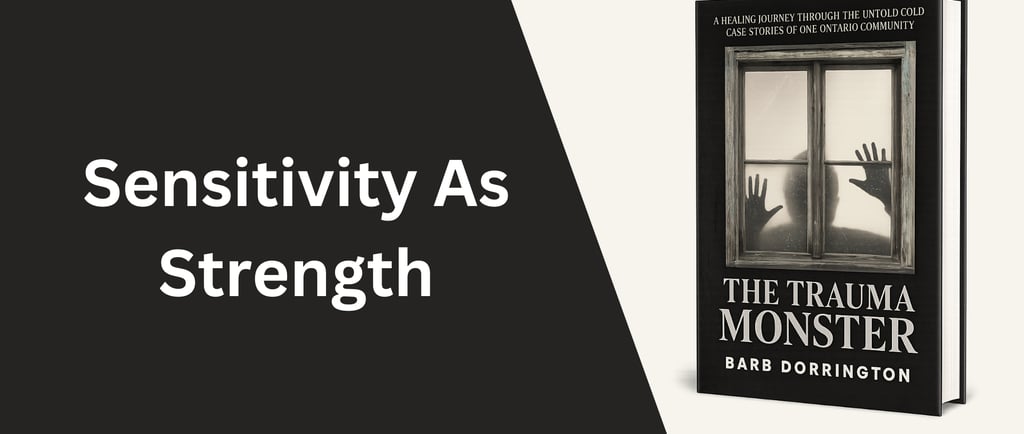
In The Trauma Monster, Barb Dorrington challenges the myth of being “too sensitive” and invites survivors to see their sensitivity as a sign of resilience, empathy, and inner wisdom.
Where the Myth Comes From
Being told you’re “too sensitive” often starts in childhood. Maybe your emotions were dismissed or mocked. Maybe you were told to “get over it” or “stop crying.” Over time, you internalize the belief that your feelings are a problem rather than a signal.
For trauma survivors, heightened sensitivity is not a weakness—it’s a nervous system doing its best to keep you safe. Sensitivity is vigilance, intuition, awareness. It’s a survival skill.
The Hidden Strengths of Sensitivity
1. Empathy
Sensitive people often notice subtle shifts in others’ emotions. This makes you compassionate, understanding, and deeply connected.
2. Intuition
Your ability to pick up on small details and “gut feelings” is a powerful tool. It’s your body’s way of guiding you toward safety and truth.
3. Creativity
Many sensitive souls express themselves through art, music, or writing. Sensitivity fuels imagination and self-expression.
4. Resilience
Surviving trauma while feeling deeply shows incredible strength. Sensitivity doesn’t make you fragile—it proves your capacity to endure and adapt.
How to Reframe Sensitivity in Your Life
1. Stop Apologizing for Feeling
Your emotions are valid. Full stop. You don’t need to shrink them for anyone.
2. Recognize Sensitivity as Data
Your reactions aren’t overreactions—they’re information. Ask: “What is this feeling telling me?”
3. Create Safe Spaces for Expression
Surround yourself with people who honor your emotions instead of dismissing them. Give yourself outlets like journaling, art, or therapy.
4. Protect Your Energy
Being sensitive means you absorb a lot. Boundaries around time, space, and relationships are essential.
5. Celebrate It
Reframe sensitivity as a gift. Instead of saying, “I’m too sensitive,” try: “I’m deeply in tune with myself and others.”
Sensitivity is Strength
As Barb Dorrington reminds us in The Trauma Monster, the world doesn’t need you to harden—it needs your softness, your empathy, your perspective. Sensitivity is what makes you human, connected, and compassionate.
The next time someone tells you you’re “too sensitive,” remember: you’re not too much. You’re exactly enough. And your sensitivity isn’t something to hide—it’s something to honor.