
The Power of Safe Connection: Why Healing Happens in Relationships
Barb Dorrington
11/17/20252 min read
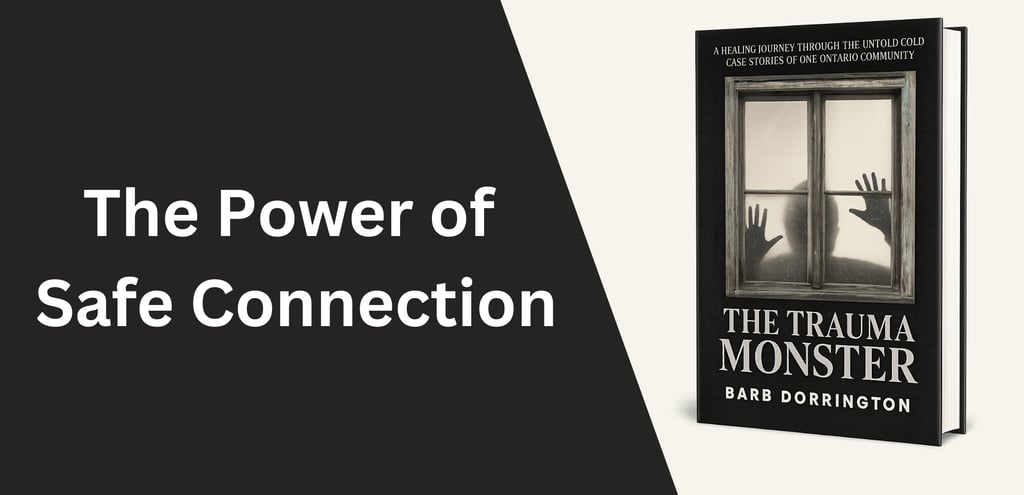
One of trauma’s greatest lies is that we must heal alone. When pain and betrayal come from people, it’s natural to believe that people can’t be trusted. Isolation feels safer. Independence feels protective. But as Barb Dorrington reminds us in The Trauma Monster, healing rarely happens in isolation—it happens in connection.
The truth is, trauma damages our sense of safety with others. Healing restores it.
Why Trauma Disconnects Us
When we experience trauma—especially relational trauma like neglect, abuse, or abandonment—our nervous system learns that closeness equals danger. We build emotional walls to protect ourselves. We become hyper-independent, mistrustful, or afraid of vulnerability. These behaviors are not flaws; they’re survival strategies.
But while isolation keeps us safe, it also keeps us stuck. We can’t fully heal from wounds that were created in relationships without allowing healthy relationships to help repair them.
How Safe Connection Heals
1. Co-Regulation:
Our nervous systems are wired for connection. When we are around safe, calm, and supportive people, our bodies begin to relax. This process—called co-regulation—helps retrain our nervous system to recognize safety again.
2. Witnessing and Validation:
Being seen and believed is profoundly healing. When someone listens to your story without judgment, it rewrites the old narrative that your pain doesn’t matter.
3. Relearning Trust:
Safe relationships offer opportunities to experience reliability, empathy, and honesty—all the things trauma once taught us to doubt.
4. Practicing Vulnerability:
Sharing feelings, even in small doses, helps soften the armor we built. Each time you open up and are met with care instead of rejection, your brain learns that connection can be safe.
Steps Toward Building Safe Connections
1. Start Small.
You don’t need to dive into deep relationships right away. Begin with moments of small connection—a smile, a short conversation, a kind message.
2. Choose People Who Feel Safe.
Look for those who listen more than they talk, respect your boundaries, and make you feel calm instead of anxious.
3. Communicate Your Needs.
It’s okay to tell others what you need to feel safe. Clear communication builds trust and reduces misunderstanding.
4. Seek Supportive Spaces.
Therapy, support groups, or online healing communities can be wonderful starting points for practicing connection.
5. Be Patient.
Healing relationships take time. It’s okay to take it slow. You’re learning a new way of being.
Connection is the Medicine
As Barb Dorrington beautifully illustrates in The Trauma Monster, trauma may be born in disconnection, but healing is born in safety, love, and understanding.
You don’t have to face the trauma monster alone. Step by step, conversation by conversation, the walls begin to lower—and what once felt dangerous starts to feel like home again.
Healing happens when we let safe people in.