
When Anger Heals: Reclaiming the Emotion You Were Taught to Suppress
Barb Dorrington
11/24/20252 min read
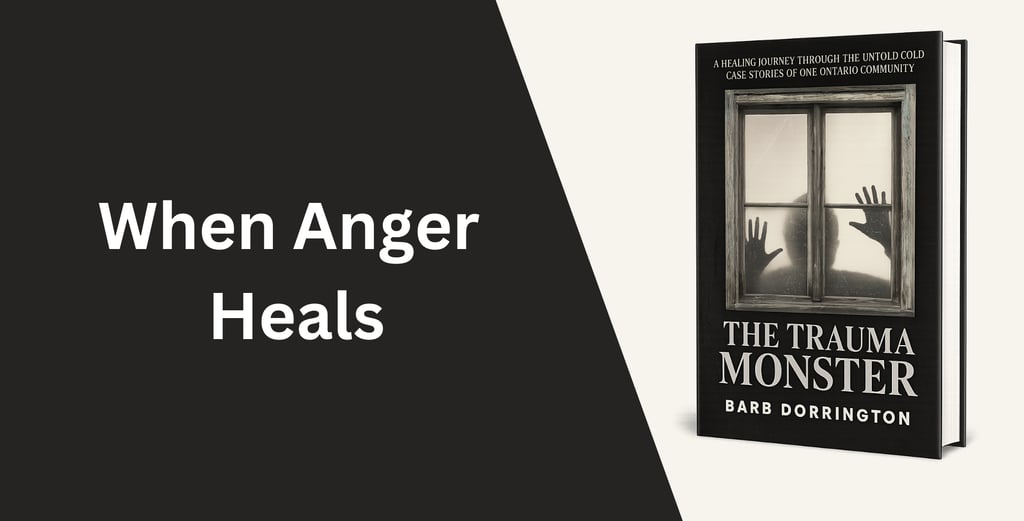
For many trauma survivors, anger feels like a dangerous emotion. Maybe you grew up in a home where anger led to harm—or you were taught that expressing anger made you “bad,” “ungrateful,” or “too much.” Over time, you may have learned to swallow your anger, turning it inward as shame or self-blame.
But as Barb Dorrington reminds us in The Trauma Monster, anger itself isn’t the problem. The problem is what happens when we’re forced to suppress it.
Anger Is a Messenger
Anger is one of the most misunderstood emotions. It’s not just rage or aggression—it’s information. It’s your body’s way of saying, “Something isn’t right.” It signals when your boundaries have been crossed, your needs ignored, or your voice silenced.
When you repress anger, you also repress your power. That energy doesn’t disappear—it often turns into anxiety, depression, or self-doubt.
Learning to listen to your anger instead of fearing it can be one of the most transformative parts of healing.
What Suppressed Anger Looks Like
Not all anger looks explosive. Sometimes it looks quiet, subtle, or self-directed. You might be suppressing anger if you:
· Struggle to say no or set boundaries
· Feel resentful but don’t express it
· Constantly apologize or people-please
· Experience chronic tension or fatigue
· Have frequent emotional shutdowns or outbursts
These are not character flaws—they’re trauma responses. They developed to keep you safe when expressing anger wasn’t allowed.
How to Reclaim Anger as a Healing Force
1. Redefine Anger
Stop labeling anger as “bad.” Instead, see it as a guide—a natural, protective response that points toward what needs healing or change.
2. Find the Message Beneath the Heat
Ask yourself: What is this anger trying to tell me? Often, underneath the anger is grief, fear, or unmet needs.
3. Express It Safely
Release anger in ways that don’t harm yourself or others: journaling, movement, therapy, art, or even speaking your truth out loud in a private space.
4. Connect Anger to Boundaries
Anger often arises when a boundary has been crossed. Use it as a signal to clarify or reinforce what’s acceptable to you.
5. Practice Self-Compassion
If expressing anger feels scary, start small. Remind yourself that your feelings are valid, and it’s okay to reclaim this part of you.
Anger as Empowerment
In The Trauma Monster, Barb Dorrington describes anger not as chaos, but as clarity. When harnessed with awareness, anger becomes a tool of empowerment—it helps you take back your voice, your boundaries, and your self-respect.
Anger says: I deserve better.
Anger says: I will no longer tolerate harm.
Anger says: I matter.
Your anger isn’t something to fix—it’s something to understand. It’s not a storm to fear, but a compass pointing you back to your power.