
When Silence Becomes a Burden: Finding Your Voice After Trauma
For many trauma survivors, silence was not chosen. It was imposed. Discover how healing invites us to slowly reclaim our stories and find our voice again.
Barb Dorrington
3/2/20261 min read
For many trauma survivors, silence was not chosen. It was imposed. Cultural pressures, fear of being disbelieved, shame, and the sheer exhaustion of carrying what happened can make speaking feel impossible. Over time, that silence can become its own weight.
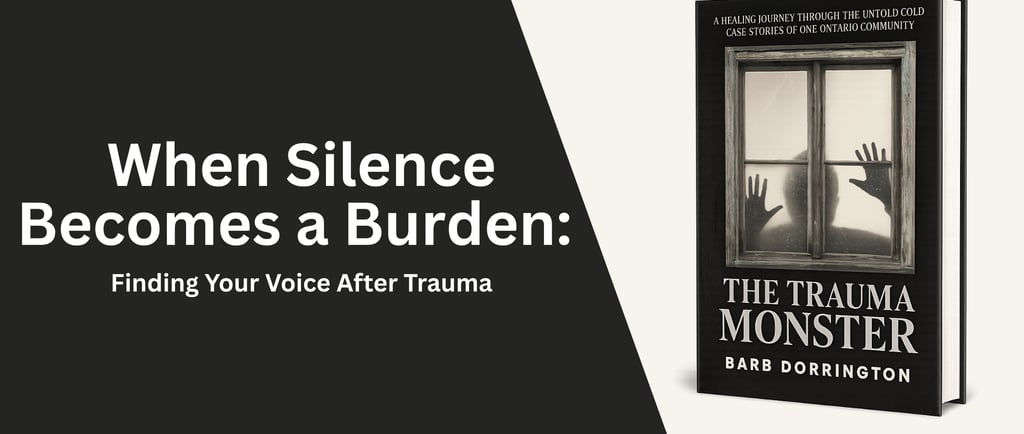
In The Trauma Monster, Barb Dorrington draws on the true stories of children in Southwestern Ontario who were silenced by the norms of their era. Decades passed before many of them could share what they witnessed or endured. Their courage in finally telling their stories is a reminder of what is possible when silence begins to lift.
Silence after trauma can look like many things:
Minimizing what happened
Changing the subject when certain topics arise
Feeling unable to name what you experienced
Protecting others by not sharing your pain
None of these responses mean something is wrong with you. They often mean your nervous system found a way to keep you safe when speaking felt dangerous.
Finding your voice does not require a dramatic moment of revelation. It can begin quietly. A sentence shared with someone you trust. A few words written in a private journal. A feeling noticed and named, even just to yourself.
Healing invites us to reclaim the stories that were taken from us or that we set aside to survive. Not all at once, and not without support. But gradually, in ways that feel safe and true.
Your story has value. It always did. And there is no expiration date on telling it.